Need to avoid gluten in your diet?

If you to need to avoid gluten in your diet, like me, then you might have to turn detective
as reading food labels can require some insider knowledge.

Oh and a magnifying glass can be helpful too!

Wouldn't it be nice if every product on the supermarket shelves told you in plain English that is is "gluten free" or that it "contains gluten"? Some do of course, but it isn't always that easy.

Gluten can be hidden in obscure terms that can trick the unsuspecting celiac but over the years I have discovered ways that it can hide and it is now a lot easier to avoid gluten that it was before.

Some products are easy to avoid as they list "wheat flour" in their ingredients. But what if they mention thickener or binder, are they safe?

Avoid gluten in disguise

The following list gives words and phrases that could spell danger and are best avoided on a gluten free diet.
  • Flavourings
  • Edible or Food Starch
  • Fillers
  • Seasonings
  • Binder
  • Rusk
  • Bran
  • Wheatgerm
  • Wheat protein
  • Wholegrain
  • Thickening
  • Wheat starch
  • Malt

Check with the manufacturer

So what do you do if product lists a suspect ingredient? Avoid it in case? Well that is the safest option but you could try phoning the manufacturer for more information.

Tell them you need to avoid gluten in your diet and ask if they can assure you that the product is safe for you to eat.

Some companies will be very helpful and may even send you a list of all the products they make that are gluten free. Others may not be so knowledgeable, especially if they use bought-in ingredients.

But remember that manufacturers can, and do, change their ingredients often, so always check the label even if they have told you in the past that their food is safe to eat.

Strangely you will often find that a certain sized packet is safe whereas the same product in a smaller or larger quantity is not!

You can also get caught out by products that use such a tiny amount of a gluten containing food that it does not have to be listed. For example some confectionary manufacturers can use flour to stop the sweets sticking to the conveyor belt. It isn't an actual ingredient but it can still be enough to make you sick if you need to avoid gluten.

Allergy Advice

Here in the UK more products are including an Allergy Advice section on the label. This will tell you if the food contains wheat, gluten, nuts or other foods that can cause problems.

Check for this section before you read through all the ingredients, as it could save you some time when shopping. The supermarket Aldi is especially good for this, even if they do label obvious foods like tinned carrots as being gluten free!

What happens if the allergy label states that the food has been prepared in a facility that uses gluten in other items?

Unless the producer is extremely careful and cleans the equipment thoroughly in between batches, traces of gluten can remain to contaminate the supposedly safe food. Wheat flour can also float in the air and settle on foods that should have been safe. If you are very sensitive then it can be a good idea to avoid gluten contamination by giving these products a miss.

Be warned!

Let me tell you a little story. I attended a two day craft show one summer and just across the aisle was a home-made fudge stand. I was tempted so on the first day I went over and checked with the vendor that my favourite flavour was gluten free. He was very helpful and showed me the ingredient list and reassured me that he made the fudge himself and was certain that it wouldn't cause me any harm.

I decided to take a chance and treated myself. The fudge was gorgeous and I suffered no ill effects. Fantastic!

So, being greedy, the next day I went back for more. Bad move! Within half an hour I was racing for the toilet block at the other end of the field. What had happened? The ingredients hadn't changed overnight had they?

I checked again and we struggled to discover what had caused the reaction. Then we realised that this time the vendor had served my fudge with gloves he had used for other confectionary. That was enough to contaminate the sweets and cause me problems.

After that I always ask for my unwrapped foods to be handled with fresh gloves. This can get me some exasperated looks but I would rather be safe than sorry!

Dr Christine Farlow gives some useful information about reading food labels on her Healthy Eating Advisor site.


Foods containing gluten

Do not eat foods off this list!

Taboo list

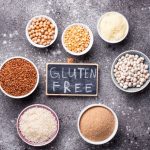
Gluten Free Foods

Anything in this list is safe to eat on a gluten free diet

gluten free food list


[?] Subscribe To This Site

XML RSS
Add to Google
Add to My Yahoo!
Add to My MSN
Subscribe with Bloglines

Subscribe to Gluten Tag - say hello to a new way of eating. Monthly newsletter contains hints, tips and recipes.


Enter your E-mail Address

Enter your First Name (optional)

Then

Don't worry -- your e-mail address is totally secure.
I promise to use it only to send you Gluten Tag.


Copyright© 2007. Please note I am not a doctor, just a fellow sufferer of coeliac disease.
Therefore no information on this site should be taken as medical advice.
Return to top of how to avoid gluten
Return to Home Page